James Bible Study: A Practical 5-Week Reading Plan
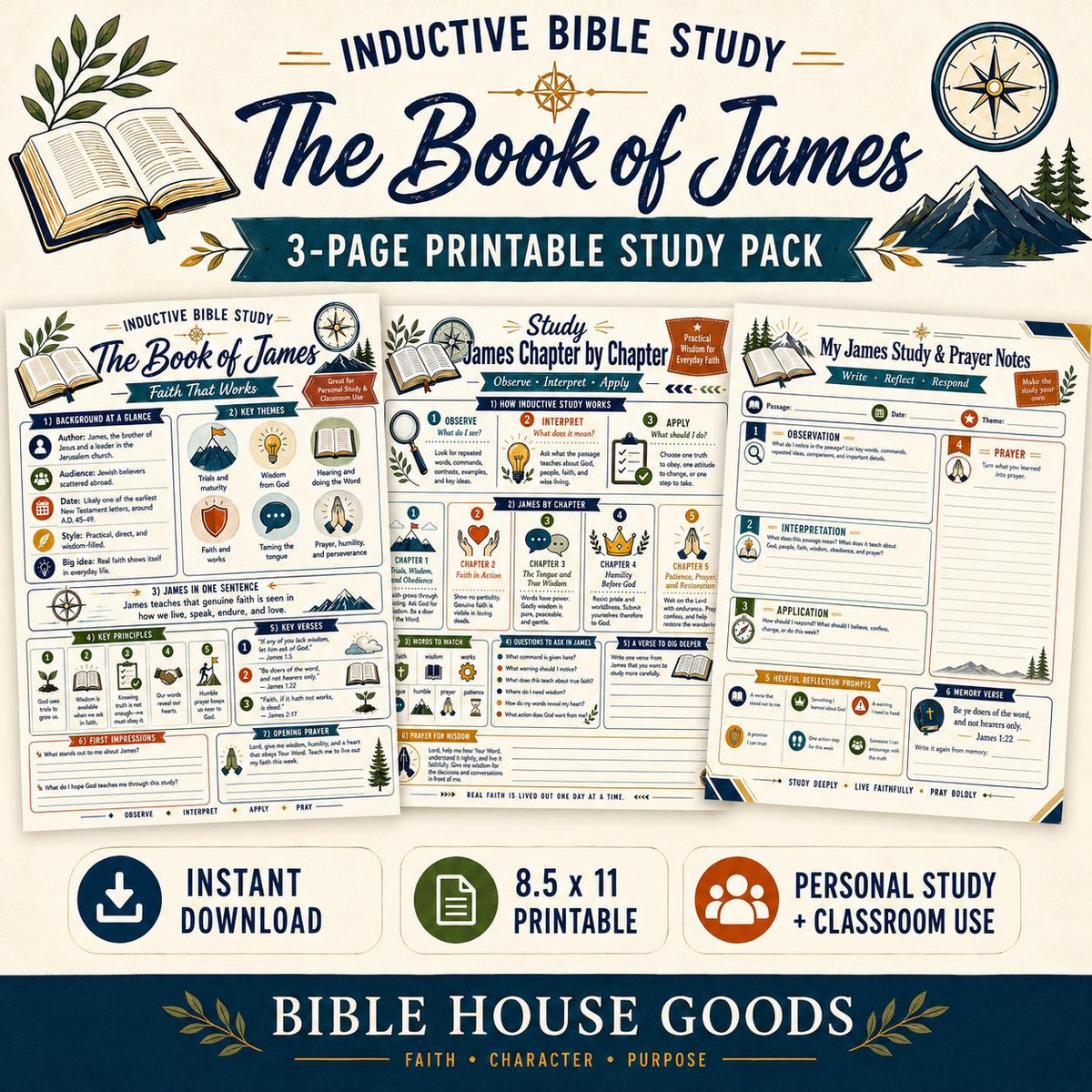
A James Bible study gives you a practical place to consider how faith shapes everyday life. The letter addresses trials, wisdom, favoritism, speech, humility, wealth, and prayer. Its five chapters are short enough to study over several weeks, while the questions it raises deserve careful reading and an honest response.
This five-week reading plan works for personal study or a small group. Read one chapter each week, return to smaller sections, and choose one response grounded in the text. You do not need to master every question before beginning. Keep your Bible open, note what you observe, and bring difficult passages back to the wider context.
How to use this James Bible study plan
Begin by reading the whole letter of James, either in one sitting or across a few days. Notice repeated themes and the people James addresses. The opening identifies the writer as James, a servant of God and of the Lord Jesus Christ, and addresses the twelve tribes scattered abroad.
Use four steps in each session: observe what the passage says, interpret it in context, consider an application, and pray. A helpful application is specific enough to act on and connected to the passage you read. Our inductive Bible study guide explains the first three steps in more detail.
Week 1: Trials, wisdom, and receiving the Word
Read James 1. Divide the week into James 1:1–11, 1:12–18, and 1:19–27. Use another day to reread the chapter and a final day for reflection and prayer.
Notice how James distinguishes trials from temptation and calls believers to ask God for wisdom. Later, he connects receiving the Word with doing what it says. Follow the transitions carefully rather than treating every sentence as an unrelated proverb.
- What does James say trials can produce?
- What does the passage teach about God and temptation?
- How does the mirror illustration describe hearing without acting?
Possible response: Choose one conversation in which you will practice listening before speaking. Pray for wisdom, then review how your response reflected James 1:19–25.
Week 2: Favoritism and active faith
Read James 2. Study James 2:1–13, then 2:14–26. Reread both sections together to see the connection between treatment of others and the faith a person claims.
James challenges preferential treatment based on outward status. His discussion of faith and works uses concrete needs and biblical examples. Read the entire argument before trying to explain one sentence on its own. Good works are not a way to purchase God's favor; James challenges a claim of faith that leaves a neighbor's need unanswered.
- How does favoritism appear in the gathering James describes?
- What is missing from words that offer no practical help?
- How do the examples of Abraham and Rahab support the argument?
Possible response: Notice someone you may overlook, and choose a respectful, practical way to serve them.
Week 3: Speech and wisdom from above
Read James 3. Study James 3:1–12 and 3:13–18, then compare the two sections. Notice the illustrations James uses to describe the influence of the tongue.
The chapter moves from the responsibility of teaching to the difficulty of controlling speech and the character of wisdom. Ask how your words relate to the wisdom you claim to follow.
- What do the bit, rudder, and fire illustrations emphasize?
- What contradiction does James describe in blessing and cursing?
- What qualities mark the wisdom that comes from above?
Possible response: Pause before sharing a criticism or repeating a story about another person. Consider whether your words are truthful, necessary, and consistent with the passage's call to peace.
Week 4: Humility and dependence on God
Read James 4. Study James 4:1–10, 4:11–12, and 4:13–17. Notice how desires, judging others, and confident plans reveal the condition of a person's heart.
James calls readers toward submission to God and humility. His teaching about plans invites acknowledgment of human limits and dependence on the Lord, alongside the responsibility to do the good a person knows to do.
- What does James identify beneath the quarrels?
- What does humility before God involve in this passage?
- How should awareness of life's uncertainty shape planning?
Possible response: Revisit one plan with prayer, wise counsel, and a willingness to recognize what is outside your control. Our biblical decision-making guide offers questions for that reflection.
Week 5: Justice, patience, and prayer
Read James 5. Study James 5:1–6, 5:7–12, and 5:13–20. Give attention to each section before connecting the warnings, encouragements, and instructions.
The chapter condemns unjust use of wealth, encourages patience, and calls the church to prayer and care. Read the instructions about illness with your church's leaders and in the context of the whole passage. Avoid turning the text into a promise that every situation will resolve in the same way.
- What wrongdoing is described in the warning to the rich?
- How do the examples encourage patience?
- What forms of prayer and mutual care appear at the end?
Possible response: Bring a real concern to prayer and choose one appropriate act of care for someone who welcomes your help.
Bring the study into a group conversation
Ask each person to bring one observation, one question, and one response. Read the passage aloud and check answers against the text. Leave time for prayer and avoid requiring private disclosures as proof of honest participation.
Our James Bible Study Printable includes a three-page overview, chapter guide, and study and prayer notes. It provides guided space to use alongside this five-week blog plan; it is a digital resource rather than a physical workbook.
Choose your first reading time and begin with James 1. Keep returning to what the passage says and one faithful response. Explore the James study printable if written prompts would help you stay organized, and let the study continue shaping your listening, speech, generosity, and prayer after the five weeks end.